Why Your Deadbolt Is Hard to Turn and How to Fix It
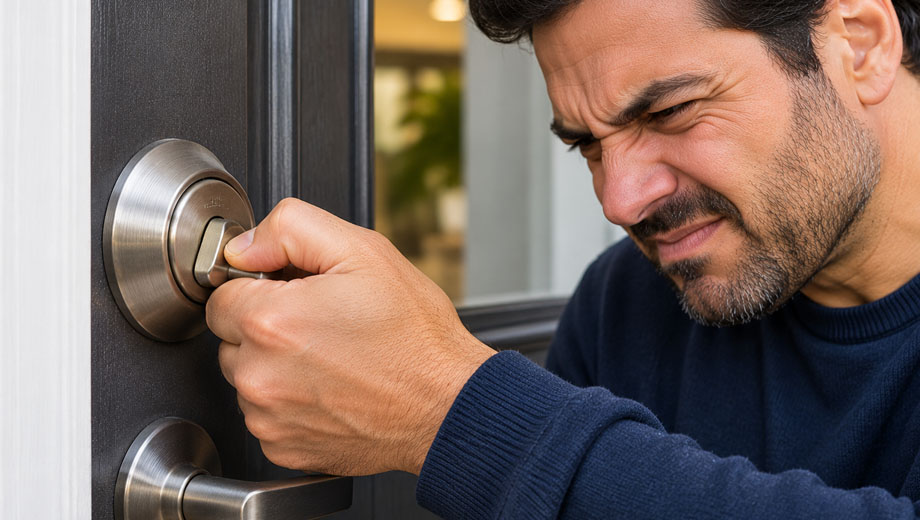
A deadbolt should lock and unlock smoothly without requiring much effort. If you find yourself twisting your key harder than usual, pushing against the door, or struggling to turn the thumb lock, something isn’t working correctly.
A deadbolt that’s hard to turn is a common problem for homeowners and businesses in San Antonio. Sometimes the issue is as simple as a loose screw or a misaligned door. Other times, the lock’s internal components may be worn out and need professional attention.
At Keymex Locksmith, we help San Antonio residents diagnose and repair stubborn door locks. Here’s what might be causing your deadbolt to stick and what you can do about it.
1. Your Deadbolt and Strike Plate Are Misaligned
One of the most common reasons a deadbolt becomes difficult to turn is poor alignment between the lock and the strike plate.
The strike plate is the metal plate installed on your door frame where the deadbolt slides into place. When the door shifts even slightly, the bolt can rub against the edge of the opening instead of sliding freely.
This creates resistance when locking or unlocking your door.
How to check:
- Open your door completely.
- Turn the deadbolt using your key or thumbturn.
- If the lock operates smoothly while the door is open but becomes difficult when closed, alignment is likely the problem.
- Inspect the strike plate for scratches or rubbing marks.
How to fix it:
Start by tightening any loose door hinge screws. A sagging door can often be corrected by securing the hinges.
If the deadbolt still doesn’t line up with the strike plate, the plate or door may need professional adjustment.
Avoid forcing the lock or unnecessarily enlarging the strike plate opening, which could weaken your door’s security.
2. Dirt and Debris Have Built Up Inside the Lock
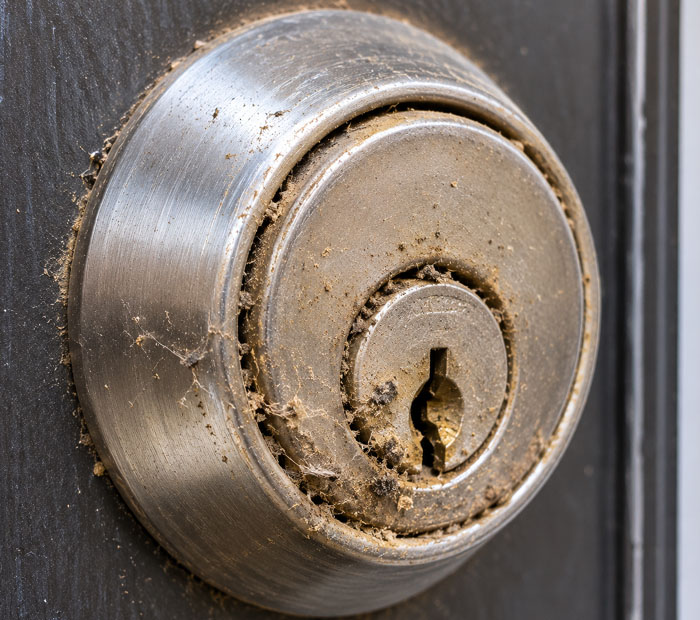
Over time, dust, dirt, and other debris can collect inside a deadbolt cylinder.
These particles can interfere with the small internal components that allow the key to rotate.
This is especially noticeable when a lock hasn’t been maintained for several years.
Signs of a dirty lock include:
- The key feels rough when turning.
- The deadbolt occasionally sticks.
- You need to jiggle the key to unlock the door.
- The lock becomes increasingly difficult to operate.
How to fix it:
Use a lubricant specifically recommended for your lock model. Apply only the amount directed by the manufacturer and gently operate the key several times.
Avoid using household cooking oils or heavy lubricants, which can attract additional dirt.
If lubrication doesn’t improve the problem, the cylinder may need professional cleaning or replacement.
3. Your Door Has Shifted Due to Weather Changes
San Antonio experiences hot summers, humidity, and changing weather conditions throughout the year.
These conditions can cause wooden doors and frames to expand, contract, or shift slightly.
Even a small change in door alignment can make your deadbolt harder to turn.
You might notice that your lock works perfectly during certain months but becomes difficult during others.
How to fix it:
Check whether the door is rubbing against the frame or requires extra pressure to close.
Inspect the hinges and make sure they’re securely attached. If the door has warped or shifted significantly, adjusting the strike plate alone might not solve the issue.
A professional locksmith can determine whether the problem is with the lock, door alignment, or surrounding hardware.
4. Your Key Is Worn Out or Damaged
Sometimes the deadbolt isn’t the problem at all.
Keys gradually wear down through daily use. Their edges can become rounded, and the cuts may no longer align properly with the pins inside the lock cylinder.
A bent or poorly duplicated key can create similar problems.
How to check:
Try using a spare key that is in better condition.
If the spare key works smoothly while your everyday key sticks, the original key may be worn out.
How to fix it:
Have a new key made using an original or properly cut key whenever possible.
Avoid repeatedly copying a badly worn key because the new copies may reproduce the same inaccuracies.
If multiple keys have trouble operating the lock, the cylinder itself may need attention.
5. The Deadbolt's Internal Components Are Wearing Out
Deadbolts contain several moving parts, including pins, springs, and mechanisms that extend and retract the bolt.
After years of regular use, these components can wear down.
A failing lock cylinder may feel unusually stiff, catch during rotation, or stop working consistently.
Warning signs include:
- The deadbolt remains stiff even when the door is open.
- The key sometimes turns but doesn’t operate the bolt correctly.
- The thumbturn feels loose or unusually resistant.
- The lock frequently jams despite lubrication and alignment checks.
How to fix it:
If the internal mechanism is damaged, a locksmith can inspect the lock and determine whether repair or replacement is the better option.
Not every stiff deadbolt needs to be replaced. In some cases, correcting the installation or servicing the cylinder can restore proper operation.
6. Loose or Overtightened Lock Hardware
A deadbolt that’s installed incorrectly can also be difficult to operate.
If the mounting screws are too tight, certain lock mechanisms may bind. If they’re too loose, the hardware may shift and operate unevenly.
This problem sometimes appears after homeowners install a new deadbolt themselves.
How to fix it:
Inspect the visible mounting hardware for looseness or improper positioning.
Follow the manufacturer’s installation instructions and avoid overtightening screws.
If the problem started immediately after installation, the deadbolt may need to be repositioned.
When Should You Call a Locksmith for a Sticking Deadbolt?
Some deadbolt problems can be resolved with simple maintenance. However, certain situations are better handled by a professional.
Consider calling a locksmith if:
- Your deadbolt is becoming progressively harder to turn.
- Your key repeatedly gets stuck inside the lock.
- The door cannot be securely locked.
- You’ve already tried basic troubleshooting without success.
- The lock is damaged, loose, or not operating correctly.
- Your electronic or smart deadbolt repeatedly reports jamming errors.
Never force a key to turn inside a stuck deadbolt. Excessive pressure can bend or break the key, potentially making the repair more complicated.
If your deadbolt isn’t fully extending into the frame, your door may not be properly secured even if it appears locked.
Should You Repair or Replace a Stiff Deadbolt?
Whether you should repair or replace your deadbolt depends on its condition.
If the issue is caused by a misaligned strike plate, loose hinges, or minor maintenance problems, a repair may be all that’s necessary.
However, if the lock has significant internal wear, damaged components, or recurring mechanical failures, replacing the deadbolt may be more practical.
A locksmith can also help you choose an appropriate replacement if you’re considering upgrading your home’s security.
Frequently Asked Questions
Why is my deadbolt hard to turn from the outside but easy from the inside?
If the thumbturn works smoothly but the key is difficult to turn, the issue may involve the key or exterior lock cylinder. A worn key, dirty cylinder, or internal wear could be responsible. Testing the lock with the door open can help narrow down the cause.
Can I use WD-40 on a stiff deadbolt?
It’s better to use a lubricant specifically approved by the lock manufacturer. Some general-purpose lubricants can leave residue or attract dirt, potentially making the problem worse over time.
Why does my deadbolt only stick when the door is closed?
This usually indicates that the deadbolt and strike plate aren’t properly aligned. A sagging door, loose hinges, or a shifting frame could be causing the bolt to rub against the strike opening.
Can a locksmith fix a deadbolt without replacing it?
Yes. Many deadbolt problems can be repaired through adjustments, servicing, or replacement of individual components. Whether repair is practical depends on the lock’s condition and the availability of replacement parts.
Is a hard-to-turn deadbolt a security risk?
It can be. A deadbolt that doesn’t extend fully or operate consistently may leave your door improperly secured. Addressing the problem early can help prevent lockouts and security issues.
Professional Deadbolt Repair in San Antonio, TX
If your deadbolt is sticking, difficult to turn, or no longer locking properly, Keymex Locksmith can help.
We provide residential and commercial locksmith services in San Antonio, including deadbolt troubleshooting, lock repairs, lock replacement, and installation.
Whether your front door lock needs an adjustment or your existing deadbolt is ready for replacement, our team can help identify the problem and recommend a practical solution.
We serve customers throughout San Antonio and surrounding communities, including Converse, Universal City, Live Oak, Selma, Cibolo, and New Braunfels.
Contact Keymex Locksmith
Phone: (210) 300-7056
Location: 2400 West Ave, Suite 1, San Antonio, TX 78201
Don’t wait until a stubborn deadbolt leaves you locked out or unable to secure your home. Contact Keymex Locksmith for professional assistance.