Why Commercial Door Closers Fail:
Common Causes and When to Replace Them
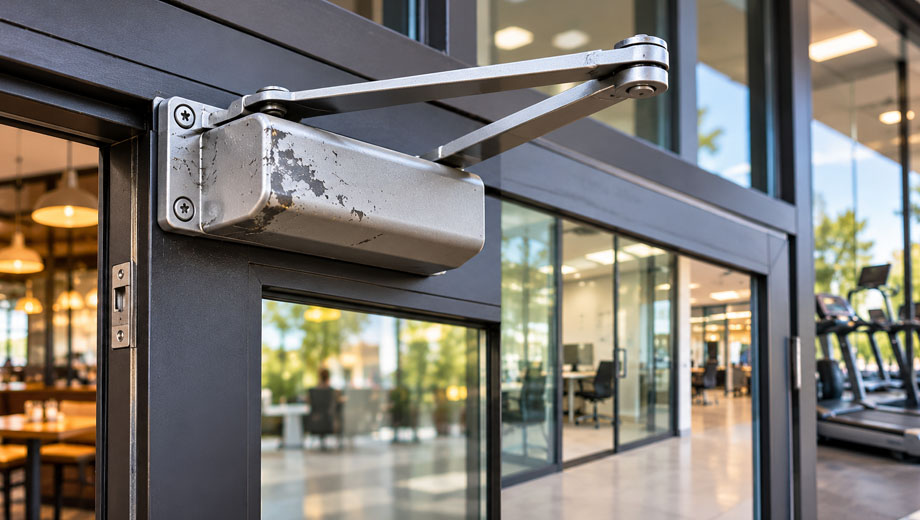
Commercial door closers are an essential part of keeping businesses safe, secure, and accessible. Whether installed on a retail storefront, office entrance, restaurant, or warehouse, these devices control how quickly and smoothly a door closes after someone walks through it.
Unfortunately, commercial door closers don’t last forever. Constant use, improper installation, worn internal components, and environmental conditions can eventually cause them to malfunction.
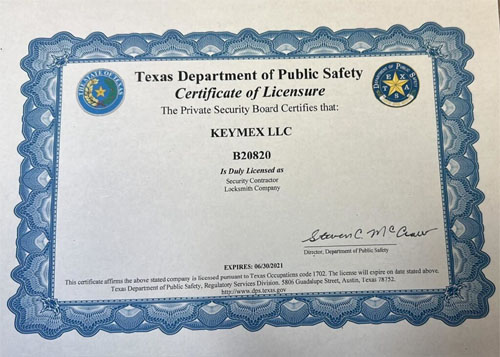
At Keymex Locksmith in San Antonio, TX, we help businesses address commercial door hardware problems, including malfunctioning door closers, damaged locks, and door alignment issues.
Understanding why commercial door closers fail can help business owners prevent expensive repairs, reduce safety hazards, and keep their entrances working properly.
What Does a Commercial Door Closer Do?
A commercial door closer is a mechanical device designed to automatically close a door after it has been opened.
Most commercial door closers use a spring mechanism combined with hydraulic fluid to control the closing speed.
These mechanisms are commonly installed on:
- Retail stores and shopping centers
- Office buildings
- Restaurants and commercial kitchens
- Apartment buildings
- Medical offices
- Schools and educational facilities
- Warehouses and industrial properties
A properly functioning closer should allow a door to open smoothly, close at a controlled speed, and latch securely without slamming.
When the closer starts malfunctioning, it can affect security, accessibility, and everyday business operations.
1. Hydraulic Fluid Leaks
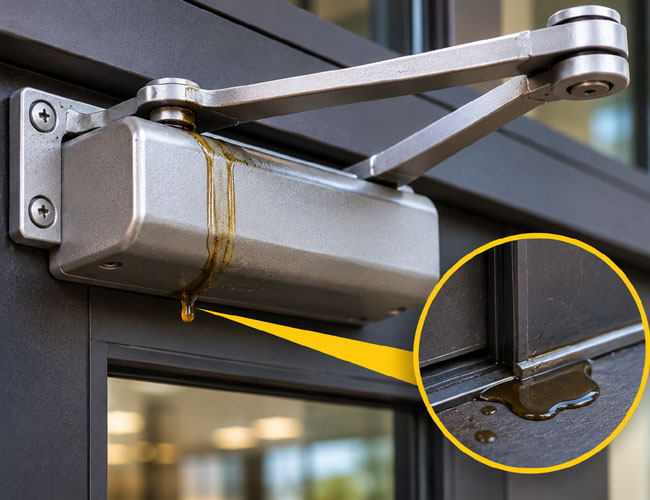
One of the most common reasons commercial door closers fail is hydraulic fluid leakage.
Most standard commercial door closers contain hydraulic fluid that controls the speed of the closing mechanism.
Over time, internal seals can wear out, allowing fluid to leak from the unit.
Signs of a Leaking Door Closer
- Oil or greasy residue around the closer body
- Fluid dripping onto the door or floor
- A door that suddenly begins slamming
- Inconsistent closing speed
- A closer that no longer responds properly to adjustment
Once a door closer loses enough hydraulic fluid, it may no longer be able to control the door safely.
Can a leaking door closer be repaired?
Minor external issues may be repairable, but a closer with failed internal hydraulic seals often requires replacement.
If your commercial door is slamming shut or leaking fluid, it’s important to have the equipment inspected before someone gets injured.
2. Incorrect Door Closer Adjustment
Commercial door closers usually have adjustable hydraulic valves that control different stages of the closing cycle.
These commonly include:
Sweep speed: Controls how quickly the door moves through most of its closing motion.
Latch speed: Controls the final portion of the closing movement to help the door latch securely.
Backcheck: On closers equipped with this feature, it provides resistance as the door opens toward its maximum permitted opening range.
When these settings are improperly adjusted, the door may close too quickly, move too slowly, or fail to latch.
Common Adjustment Problems
- Door slams loudly when closing
- Door remains partially open
- Door closes too slowly
- Door requires excessive force to open
- Door fails to latch consistently
Adjusting a commercial door closer requires an understanding of the specific hardware and its manufacturer’s instructions.
Turning adjustment screws too far can damage the mechanism or cause hydraulic fluid loss.
For businesses in San Antonio experiencing these issues, a professional commercial locksmith can inspect the closer and determine whether adjustment or replacement is appropriate.
3. Loose Mounting Screws and Worn Hardware
Commercial doors experience constant movement.
In high-traffic environments such as convenience stores, restaurants, and office buildings, entrance doors may open and close hundreds of times throughout the day.
Over time, this repeated movement can loosen mounting screws, brackets, and closer arms.
Warning Signs of Loose Hardware
- Rattling or clicking noises
- Closer arm moves unexpectedly
- Visible movement around mounting brackets
- Uneven or inconsistent closing
- Screws repeatedly coming loose
Ignoring loose hardware can cause more serious problems, including damage to the door frame or closer mounting points.
A commercial locksmith can inspect the mounting hardware, repair damaged attachment points where feasible, and determine whether the closer needs to be reinstalled or replaced.
4. Excessive Door Weight or Incorrect Closer Size
Not every commercial door closer is designed to handle the same door.
Door closers come in different sizes and strength ratings based on factors such as door width, weight, frequency of use, and installation conditions.
For example, a heavy commercial glass door may require a different closer configuration than a lightweight interior office door.
Installing an undersized or unsuitable closer can lead to premature wear.
Problems Caused by an Incorrect Door Closer
- Door fails to close completely
- Internal components wear out faster
- Door movement becomes inconsistent
- Excessive force is required to open the door
- Closer arms and mounting hardware experience additional stress
A properly selected commercial door closer should match the requirements of the door and the building.
At Keymex Locksmith, we can help businesses identify door hardware problems and determine suitable repair or replacement options.
5. Door Misalignment and Damaged Hinges
Sometimes the door closer isn’t actually the source of the problem.
A commercial door may fail to shut correctly because of damaged hinges, worn pivots, a sagging door, or a misaligned strike plate.
When a door is out of alignment, the closer may have to work against additional friction or resistance.
This can cause the closer to wear prematurely.
Signs of Door Alignment Problems
- Door scrapes against the frame or threshold
- Uneven gaps around the door
- Door sticks before reaching the closed position
- Latch doesn’t line up with the strike plate
- Door becomes difficult to open
Replacing the closer without correcting the underlying alignment problem may not solve the issue.
A professional commercial locksmith can inspect the entire door assembly to identify the actual cause.
6. Heavy Traffic and Everyday Wear
Commercial door closers are designed for repeated use, but they have a limited service life.
A busy retail storefront or restaurant may put considerably more stress on its door hardware than a small office with limited visitors.
Repeated opening and closing gradually wears the closer’s springs, seals, valves, and moving components.
Environmental conditions can also contribute to deterioration.
In San Antonio, outdoor door closers may be exposed to extreme summer heat, temperature changes, moisture, and dust.
These conditions can affect lubrication, seals, and the performance of older hardware.
For businesses with heavily used entrances, selecting a durable commercial-grade closer and scheduling periodic inspections can help minimize unexpected failures.
7. Wind and Improper Door Stops
Strong wind can place significant stress on commercial entrance doors, particularly large exterior doors.
When wind forces a door open too quickly or beyond its intended range, it can damage the closer arm, mounting hardware, hinges, or internal components.
Some business owners also rely on the door closer itself to prevent a door from opening too far.
However, not every closer is designed to function as a physical door stop.
Properly installed door stops and suitable closer features can help reduce damage from excessive opening forces.
When Should You Replace a Commercial Door Closer?
Not every malfunctioning closer needs to be replaced.
Loose mounting hardware, minor adjustment problems, and certain installation issues may be repairable.
However, replacement may be the better option when:
- Hydraulic fluid is leaking from the closer
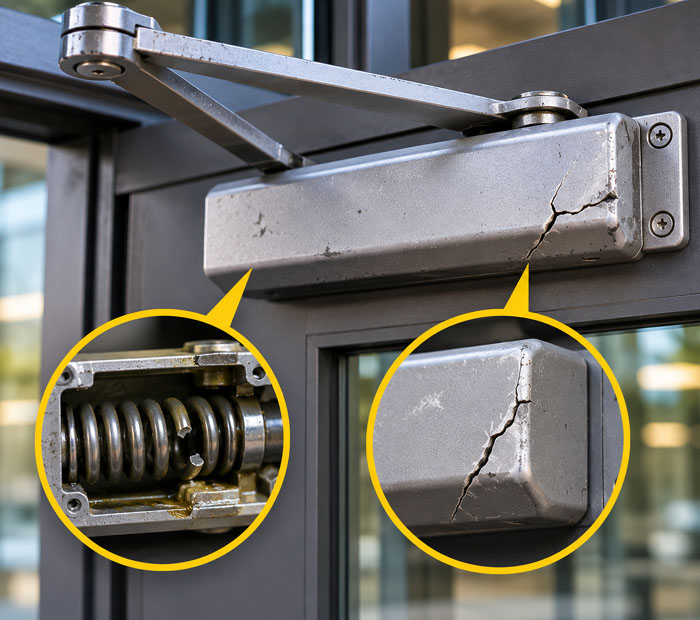
- Internal springs or mechanisms have failed
- The closer body is cracked or severely damaged
- The unit cannot maintain proper closing speed
- Replacement parts are unavailable or impractical
- The closer is unsuitable for the door’s weight or application
A commercial locksmith can evaluate the hardware and recommend the most practical solution.
Why a Broken Door Closer Is a Security and Safety Concern
A malfunctioning commercial door closer can create problems beyond inconvenience.
If an exterior door doesn’t latch properly, your business could be left unsecured.
If a heavy door slams unexpectedly, employees and customers may be at risk of injury.
Door closers are also important for accessibility and building safety.
Certain commercial doors must comply with applicable accessibility requirements, including opening-force and closing-speed provisions.
Fire-rated doors may also require approved self-closing and positive-latching hardware.
Improper adjustment, modification, or replacement can compromise these requirements.
For this reason, commercial door closer problems should be addressed promptly, especially on fire-rated doors, required exit routes, and heavily used entrances.
How to Prevent Commercial Door Closer Problems
Preventative maintenance can help extend the life of your commercial door hardware.
Business owners and property managers should regularly inspect their doors for unusual noises, oil leaks, loose components, and inconsistent closing.
It’s also important to keep hinges and pivots in good condition, avoid forcing doors beyond their intended opening range, and repair alignment problems promptly.
If your door begins slamming or failing to latch, avoid attempting major hydraulic adjustments without the correct instructions.
Professional inspection can often identify smaller issues before they become costly failures.
Commercial Door Closer Repair in San Antonio, TX
If your commercial door is slamming, sticking, leaking hydraulic fluid, or failing to latch, professional service can help identify the cause.
Keymex Locksmith provides commercial locksmith services in San Antonio and surrounding communities.
We work with businesses that need dependable door locks, commercial hardware, and security solutions.
Whether you’re managing a retail storefront, office building, restaurant, or commercial property, properly functioning door hardware is essential.
Frequently Asked Questions About Commercial Door Closers
Why is my commercial door suddenly slamming shut?
A commercial door that suddenly begins slamming may have a hydraulic fluid leak, internal closer failure, incorrect adjustment, or damaged mounting hardware.
Can a commercial door closer be adjusted?
Yes. Many commercial hydraulic door closers have adjustable sweep and latch speeds. However, adjustments should follow the manufacturer’s instructions and applicable safety requirements.
How long do commercial door closers last?
Service life depends on the closer’s quality, cycle rating, environment, installation, and frequency of use. Heavy-traffic entrances may require more frequent maintenance or replacement.
Why won't my commercial door close all the way?
Common causes include improper closer adjustment, worn hinges, door misalignment, damaged weatherstripping, or problems with the latch and strike plate.
Can you repair a leaking hydraulic door closer?
A closer with failed internal hydraulic seals often requires replacement rather than a simple adjustment.
Do commercial door closers need to meet ADA requirements?
Commercial door assemblies subject to accessibility standards must meet applicable requirements. These can include opening force and closing speed, depending on the door type and location.
Contact Keymex Locksmith for Commercial Door Repair in San Antonio
Don’t let a malfunctioning commercial door closer compromise your business’s security, safety, or accessibility.
If your business entrance is slamming shut, refusing to latch, or becoming difficult to operate, Keymex Locksmith can help you address the problem.
We proudly serve commercial customers throughout San Antonio, Converse, Universal City, Live Oak, Selma, Cibolo, and nearby Texas communities.
Keymex Locksmith – San Antonio, TX
Phone: (210) 300-7056
Schedule a commercial door hardware inspection and keep your business entrance operating safely and securely.