How to Secure French Doors Against Forced Entry
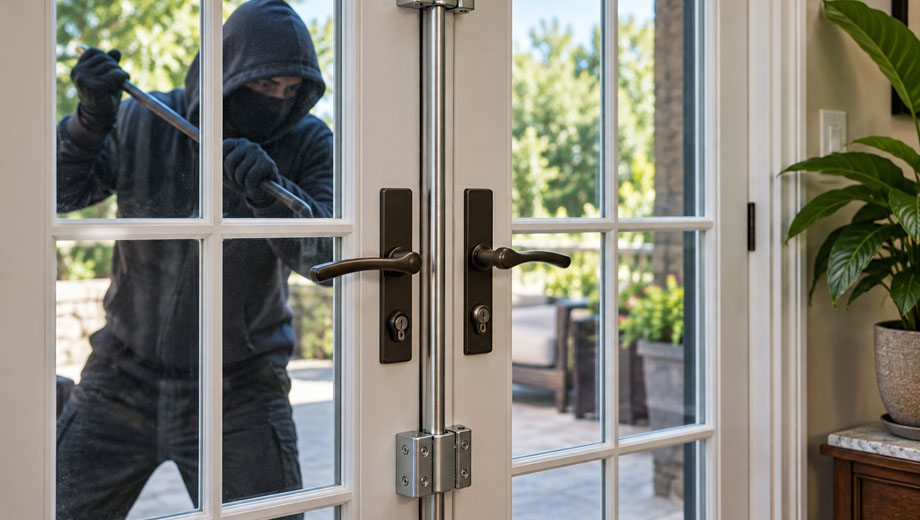
French doors add natural light and visual appeal to a home, but their design can create security concerns. Because two doors meet in the center, the locking point may be less resistant to force than a traditional single exterior door. Large glass panels, short screws, weak strike plates, and improperly secured inactive doors can also make forced entry easier.
Fortunately, homeowners can significantly improve French door security with stronger locks, reinforced hardware, proper installation, and a few additional protective measures.
Why Are French Doors Vulnerable?
Most French door systems have one active door and one inactive door.
The active door is the side used for normal entry and usually contains the handle and deadbolt. The inactive door is commonly secured by flush bolts that extend into the upper frame and floor or threshold.
Common French door weaknesses include:
- A weak center seam between the doors
- Short screws in the strike plate
- Loose or ineffective flush bolts
- Damaged door frames
- Exposed glass near the lock
- Doors that do not close or align properly
- Lightweight residential lock hardware
- Hinges that can be accessed from outside
- Worn weatherstripping that prevents complete latching
A locksmith should evaluate the entire door system rather than focusing only on the deadbolt. Even a strong lock may offer limited protection when installed on a damaged or poorly secured door.
Install a High-Quality Deadbolt
A properly installed deadbolt is one of the most important security improvements for exterior French doors.
The deadbolt should extend fully into a reinforced strike plate or into secure locking hardware on the inactive door. It should not stop halfway because of poor alignment or pressure between the doors.
A locksmith can inspect the existing deadbolt and determine whether it needs to be adjusted, repaired, or replaced.
When upgrading the lock, consider:
- Commercial-grade or high-security deadbolts
- Pick-resistant lock cylinders
- Drill-resistant components
- Reinforced strike hardware
- Restricted key systems
- Smart locks designed for exterior doors
The lock should match the door’s construction and the way the two doors meet in the center.
Reinforce the Strike Plate
The strike plate is the metal component that receives the deadbolt or latch. Many factory-installed strike plates are attached using short screws that only reach the thin surface material of the door frame.
During forced entry, the strike plate and surrounding wood may break away from the frame.
Replacing short screws with longer structural screws can help secure the strike plate more deeply into the framing behind the door. A larger reinforced strike plate can spread force across a wider area and reduce the risk of the frame splitting.
Because French doors meet in the center, the strike may be mounted to the inactive door rather than a solid wall frame. The inactive door must also be securely reinforced for the upgrade to be effective.
Strengthen the Inactive Door
The inactive side of a French door system is a major part of the overall security structure. If it moves when pushed, the deadbolt on the active door may not remain secure.
The inactive door is typically held in place by flush bolts at the top and bottom. Check that both bolts:
- Extend fully into the frame and threshold
- Are made from durable material
- Do not slide out of position
- Are not loose or damaged
- Can be secured without excessive force
- Remain locked when pressure is applied to the doors
Manual flush bolts are often more secure than small spring-loaded latches when they are properly installed and used consistently.
A locksmith may recommend replacing weak flush bolts, reinforcing the receiving points, or installing a stronger multipoint locking system.
Consider a Multipoint Locking System
A multipoint lock secures the door at several locations instead of relying on one deadbolt near the handle.
Depending on the system, the door may lock at:
- The top of the frame
- The center of the door
- The bottom threshold
Spreading the locking force across multiple points can make the doors more resistant to prying, kicking, and separation at the center seam.
Multipoint locks are often used on newer French doors, but they must be installed and adjusted correctly. A door that has shifted or become misaligned may prevent the locking points from engaging completely.
Reinforce the Door Frame
The door frame must be strong enough to support upgraded locks and hardware.
Look for:
- Cracked wood
- Loose trim
- Gaps around the frame
- Rot or water damage
- Previous forced-entry damage
- Screws pulling away from the frame
- Movement when the door is pushed
- Misalignment between the doors
A damaged frame should be repaired before new locks are installed. Additional door reinforcement hardware may also be used to strengthen vulnerable areas around the latch and deadbolt.
Protect the Center Seam
The gap where the two French doors meet can sometimes be used as a prying point.
An astragal is the vertical strip attached to one door that covers or seals the center seam. A strong astragal can make it more difficult to insert a tool between the doors and reach the locking hardware.
If the existing astragal is loose, damaged, or made from weak material, upgrading it may improve both security and weather resistance.
The doors should close evenly with minimal movement at the center.
Secure the Glass Panels
Many French doors contain large glass panels. If the glass is close to the thumb turn, an intruder may attempt to break the glass and reach the lock from the inside.
Options for improving glass security include:
- Laminated security glass
- Impact-resistant glass
- Professionally installed security film
- Decorative security grilles
- Glass-break sensors
- Window and door alarms
- Curtains or shades that reduce visibility
Security film can help hold shattered glass together, but it does not make ordinary glass unbreakable. It should be treated as an additional layer of protection rather than a replacement for strong locks and reinforced doors.
Double-cylinder deadbolts require a key on both sides and may reduce the ability to unlock the door through broken glass. However, they can create emergency-exit concerns and may not be appropriate or permitted in every property. Homeowners should confirm applicable safety requirements before installing one.
Reinforce Exposed Hinges
Some French doors swing outward, which may place the hinges on the exterior side of the home.
If the hinge pins can be removed from outside, additional security hardware may be needed. Security hinges, non-removable pins, or hinge bolts can help keep the door in place even if someone tampers with the hinges.
Inspect all hinges for:
- Loose screws
- Rust or corrosion
- Bent components
- Missing screws
- Separation from the frame
- Removable exterior hinge pins
Longer hinge screws may also improve the connection between the door and the surrounding structure.
Make Sure the Doors Close Correctly
French doors frequently become misaligned because of foundation movement, temperature changes, worn hinges, or repeated use.
A misaligned door may appear locked even when the deadbolt or flush bolts are not fully engaged.
Signs of alignment problems include:
- The doors rubbing together
- Difficulty turning the deadbolt
- Gaps around the doors
- The latch missing the strike plate
- Flush bolts that do not enter their openings
- Doors that swing open after being closed
- Visible movement when pressure is applied
Lock adjustments, hinge repairs, strike plate repositioning, or door hardware replacement may be needed to restore proper operation.
Never force a deadbolt into place. Repeatedly forcing the lock can damage the cylinder, bolt, or internal door components.
Add a Door Security Bar
A security bar or floor-mounted door brace can provide additional resistance from inside the home.
Some devices secure both French doors together, while others brace the active door against the floor. These products may be useful at night or while the home is occupied.
Choose a product designed specifically for double doors, and make sure it can be removed quickly during an emergency.
Temporary security bars should supplement properly installed locks rather than serve as the only security measure.
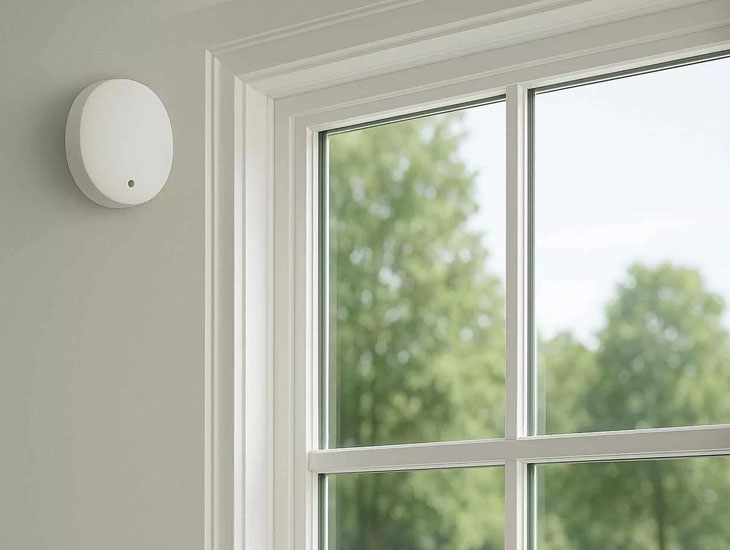
Install Door and Glass-Break Sensors
Locks help resist physical entry, while an alarm system can alert occupants when someone attempts to open or damage the doors.
French door security sensors may include:
- Contact sensors on each door
- Glass-break detectors
- Motion sensors
- Smart door sensors
- Cameras covering the entrance
- Outdoor lighting with motion activation
Both sides of the French door system should be monitored. Placing a sensor only on the active door may not detect movement of the inactive side.
Use Outdoor Lighting and Cameras
Exterior lighting can make it more difficult for someone to approach the doors without being seen.
Install lighting near French doors that lead to:
- Backyards
- Patios
- Balconies
- Side yards
- Pool areas
- Detached garages
Security cameras should provide a clear view of the doorway and the path leading to it. Avoid placing cameras where plants, furniture, or glare from the glass will block the view.
Lighting and cameras do not physically reinforce the doors, but they can improve visibility and support the rest of the home security system.
Do Not Hide Spare Keys Near the Doors
Avoid leaving spare keys under mats, inside planters, above door frames, or near patio furniture. These are among the first places an intruder may check.
Safer options include:
- Giving a key to a trusted person
- Using a professionally installed keypad lock
- Storing the key in a securely mounted lockbox
- Using temporary smart lock access for guests
- Creating controlled access through a home security system
Homeowners should also rekey their French doors after moving into a new house or when keys are lost, stolen, or not returned.
French Door Security Checklist
Homeowners should regularly check the following:
- Does the deadbolt extend completely?
- Is the strike plate tightly secured?
- Are long screws used where appropriate?
- Does the inactive door remain firmly in place?
- Do the upper and lower flush bolts work?
- Are the doors properly aligned?
- Is the center seam protected?
- Is the frame free from cracks or damage?
- Are the hinges secure?
- Is the glass protected?
- Are both doors connected to the alarm system?
- Are spare keys stored securely?
Any door that moves excessively, fails to latch, or requires force to lock should be professionally inspected.
Professional French Door Lock Services in San Antonio
Keymex Locksmith Services helps homeowners secure French doors, patio doors, entry doors, and other exterior access points throughout San Antonio.
Our residential locksmith services include:
- French door lock repair
- Deadbolt installation
- Lock replacement
- Home lock rekeying
- High-security lock installation
- Strike plate reinforcement
- Door alignment and lock adjustment
- Smart lock installation
- Broken key removal
- Emergency home lockout assistance
A locksmith can inspect your French doors, identify weak areas, and recommend security improvements based on the door style, existing hardware, and condition of the frame.
Contact Keymex Locksmith Services to schedule French door lock repair or residential security upgrades in San Antonio.
📍 Serving all of San Antonio and surrounding areas
📞 Call Keymex Locksmith now or request a quote online
Call now or request a quote online. Contact Keymex Locksmith at (210) 300-7056.